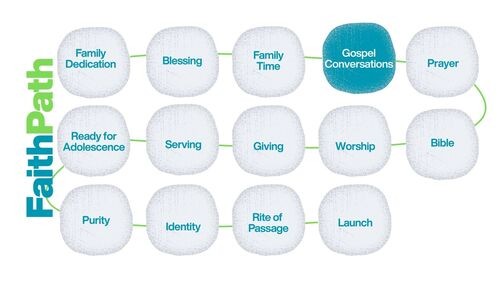
STEP THREE: ASK QUESTIONSIf you feel your child might be ready, ask open ended questions to help gauge his or her level of understanding. For example, read Romans 6:23: “For the wages of sin is death but the gift of God is eternal life in Jesus Christ our Lord.” Then ask questions like, “What is sin?” “How does your sin affect your relationship to God?” How they respond can help you sense when your child is ready to understand two important concepts:
- JESUS AS SAVIOR: The need for forgiveness and cleansing from sin which was made possible through Jesus’ sacrifice on the cross. Children have to understand the concept of their sin before they can understand the need of a Savior
- JESUS AS LORD: The need to submit to God as “the boss” by making Jesus Christ the Lord of one’s life
STEP FOUR: GUIDE YOUR CHILD IN PRAYER FOR SALVATIONRomans 10 says, “…if you confess with your mouth, ‘Jesus is Lord,’ and believe in your heart that God raised him from the dead, you will be saved. For it is with your heart that you believe and are justified, and it is with your mouth that you confess and are saved.” If you sense your child has a basic understanding of what sin is as well as what it means to accept God’s gift of salvation and His Lordship, then you can guide him or her to pray along those lines. Instead of quoting specific words for your child to repeat, it’s best to prompt using his or her own words.
STEP FIVE: PREPARE THEM FOR THE NEXT STEPSOnce your child has trusted Christ, you can begin the wonderful privilege of guiding their next steps of faith. Topics like Bible reading and prayer, baptism, worship, and even going to church now have new meaning and relevance, and you have the joy of modeling, teaching, and walking alongside them as they learn to trust, obey, and follow Jesus.