
FAITH PATH
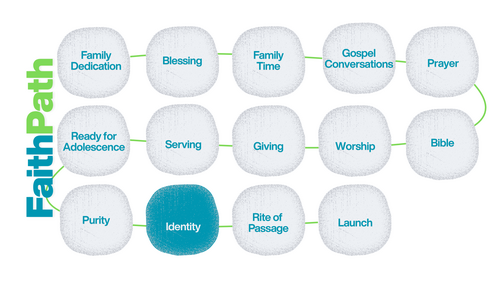
IDENTITY
Get to know more about what makes us different.
So many teenage issues—pressures, angst, depression, disappointments, and even bad choices—stem from an identity based on either what they have, what they do, or how they feel, which can be greatly avoided by an identity grounded in the Gospel. As you take the time to have ongoing conversations with your teen about their worth and purpose, remember that you must first model that your own identity, joy, and satisfaction are rooted in what God has said. This will, in turn, guard them against the lies of the world and the lure of hollow acceptance.
Set aside time to purposefully ask your teen some of the following questions: When you think about who you are, what comes to mind first? The sports you play? The family you’re in? Who your friends are? Your school or grades? Your looks or popularity or how people see you? Who you’re attracted to? Your religious activity? Your likes and dislikes? Your dating status? What you own? How many likes you get on social media?
Although these might be appealing, there’s a problem with finding an identity in any of them:
The truth is, no amount of Bible-reading, going to church, praying, having fun friends, or having the best grades and clothes will ever give us worthiness or add value—in ourselves, we have nothing to bring to the table. While everyone has God-given value and dignity from being made in His image, our brokenness from sin leaves us without purpose or direction.
Set aside time to purposefully ask your teen some of the following questions: When you think about who you are, what comes to mind first? The sports you play? The family you’re in? Who your friends are? Your school or grades? Your looks or popularity or how people see you? Who you’re attracted to? Your religious activity? Your likes and dislikes? Your dating status? What you own? How many likes you get on social media?
Although these might be appealing, there’s a problem with finding an identity in any of them:
- They don’t last: Any of these can be taken away or will change. You can get injured, friends let you down or move, feelings come and go, break-ups happen, and more. It’s exhausting to maintain such a fragile image.
- They don’t satisfy: An identity based on performance or possessions will never fill up the God-given longing for purpose, meaning, and security. True satisfaction and joy will always be missing.
- They become idols: Idolatry happens when we look horizontally for our identity and meaning in God’s creation when we were designed to find it vertically from our Creator.
The truth is, no amount of Bible-reading, going to church, praying, having fun friends, or having the best grades and clothes will ever give us worthiness or add value—in ourselves, we have nothing to bring to the table. While everyone has God-given value and dignity from being made in His image, our brokenness from sin leaves us without purpose or direction.
But there’s good news! The One who made you can be the One who defines you! The blessings that God offers in Christ give new identity and purpose to all who trust in Him. These include:
Living in relationship with God and in the life He offers, changes the way we live, makes life more purposeful, and brings true satisfaction and joy. No longer are you defined by what you do, what you have, or who others say you are. You’re who God says you are, and that’s all that matters.
It is incredibly freeing to have an identity that is simply received rather than achieved. You are free to celebrate if a friend gets a better grade than you or has better things than you, because you aren’t playing the comparison game. Rather, you have a fixed hope in the midst of failures or successes that doesn’t ride the waves of emotions that the world does. You no longer have to work for approval or do things to look good, because you know you are approved by God through Christ's work on the cross. Now you daily live in light of His love and use your gifts to bring Him glory. Now you can serve and love others just for the joy of it—not to feel better about yourself or fill up some emptiness.
- Mercy and forgiveness of sins through Jesus’ life, death and resurrection (Ephesians 1:7)
- Eternal life in heaven that is secure and unshakeable (John 10:28; Philippians 3:30)
- A new mission in life: “you are a chosen people, a royal priesthood, a holy nation, God’s special possession, that you may declare the praises of him who called you out of darkness into his wonderful light” (1 Peter 2:9)
Living in relationship with God and in the life He offers, changes the way we live, makes life more purposeful, and brings true satisfaction and joy. No longer are you defined by what you do, what you have, or who others say you are. You’re who God says you are, and that’s all that matters.
It is incredibly freeing to have an identity that is simply received rather than achieved. You are free to celebrate if a friend gets a better grade than you or has better things than you, because you aren’t playing the comparison game. Rather, you have a fixed hope in the midst of failures or successes that doesn’t ride the waves of emotions that the world does. You no longer have to work for approval or do things to look good, because you know you are approved by God through Christ's work on the cross. Now you daily live in light of His love and use your gifts to bring Him glory. Now you can serve and love others just for the joy of it—not to feel better about yourself or fill up some emptiness.