
FAITH PATH
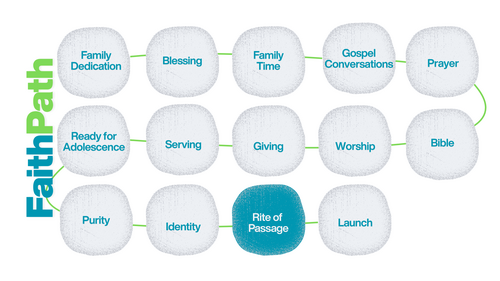
Right of Passage
Get to know more about what makes us different.
A Rite of Passage event signifies a transition from one stage to another and serves as an opportunity to set a new tone for your changing relationship with your teen, which is moving from primarily teacher to mostly coach, as he or she accepts the new freedoms and responsibilities that accompany young adulthood. Let them know that you will be there to help them work through challenges and navigate landmines as they take ownership for choices and a future walk with God. But beyond this event, always create intentional one-on-one times to connect and keep the lines of communication open over the coming months and years.
It is less important how you plan your child’s Rite of Passage, and more important that you plan it. Some families host a simple dinner with family and close friends, while others do something more elaborate like a road-trip adventure with various stops. Decide and plan what works best for your teen and your situation. Here are three simple steps to get you started:
It is less important how you plan your child’s Rite of Passage, and more important that you plan it. Some families host a simple dinner with family and close friends, while others do something more elaborate like a road-trip adventure with various stops. Decide and plan what works best for your teen and your situation. Here are three simple steps to get you started:
- Create a plan. A small investment of thought and effort will mean a great deal to your son or daughter. Some common elements of a Rite of Passage ceremony include:
- Give a Blessing: It is very important that parents use this milestone to give a blessing, usually in the form of a letter affirming the teen’s potential and expressing gratitude for his or her life.
- Give a Vision for the Future: Take time to provide direction for the future. Cast vision and direct your child in seeking the Lord as they enter a season of significant decisions that will impact the future.
- Give a Gift: Consider purchasing or making something to give your teen during this time. It doesn’t need to be extravagant. It is more important that it serves as a tangible keepsake of the event that your child can hold on to for years to come. Ideas include a piece of jewelry, a book of letters/blessings, or even a sword.
- Invite people who have made an impact in your teen’s life and/or whom they respect. Give each person a specific topic on which he or she will speak or write a letter. Some topics may include work, marriage, integrity, faith, purity, family, etc.
- Make it easy for others to participate by providing them with recommended wording for their talk or letter in order to help them avoid becoming nervous or attending ill-prepared.
NEXT STEPS
Even a simple rite of passage experience can have a powerful impact in your teen’s life. Ask yourself the following questions to plan the best approach for your son or daughter:
EVALUATE
HOW
Even a simple rite of passage experience can have a powerful impact in your teen’s life. Ask yourself the following questions to plan the best approach for your son or daughter:
EVALUATE
- Is our relationship strong enough for the experience to feel authentic vs. forced?
- Does my child have other adults in his/her life who have had enough influence to participate in such an experience?
- Does my teen show signs he/she is willing to move toward adult responsibilities and attitudes?
- If you answer no to any of these questions it might be better to plan a special dinner alone together to begin meaningful dialog rather than attempt the full rite of passage experience.
- What day is best to make this event special? On a birthday? In conjunction with a holiday? As a special day of its own?
- What date would work best for those who might need to travel to participate?
- What relatives should participate? (Grandparent, respected aunt or uncle, older brother or sister, etc.)
- Is my child close to a pastor, youth minister, teacher, or coach that he/she respects?
HOW
- Would my child prefer a formal event or casual experience?
- What would be a good setting for the event? (Family home, grandparent’s home, a favorite restaurant, the church, park, etc.)
- What kind of fun activity would our child enjoy doing with the older men or women before the formal portion of the event? (For example, a teen boy might enjoy going to shooting range or golfing while a girl might prefer shopping or tennis.)
RECOMMENDED RESOURCES